
March 7, 2026
Carbon Footprint: Complete Guide
to Measurement and Reduction
in Construction
Sustainability in architecture is no longer an abstract ethical choice, but a measurable and binding technical parameter. In a sector where the words “green” and “eco‑friendly” have often been overused, the Carbon Footprint represents the objective unit of measurement used to evaluate the real environmental impact of a building or a material.
For designers, facility managers and construction companies, understanding the dynamics of calculating and reducing CO₂ is not only a matter of environmental responsibility, but also a fundamental requirement to operate in today’s market, especially in the context of public procurement and international certifications.
What is the carbon footprint?
The Carbon Footprint is an environmental indicator that quantifies the total amount of greenhouse gas emissions (GHG – Greenhouse Gases) caused directly or indirectly by an individual, an organization, an event or a product.
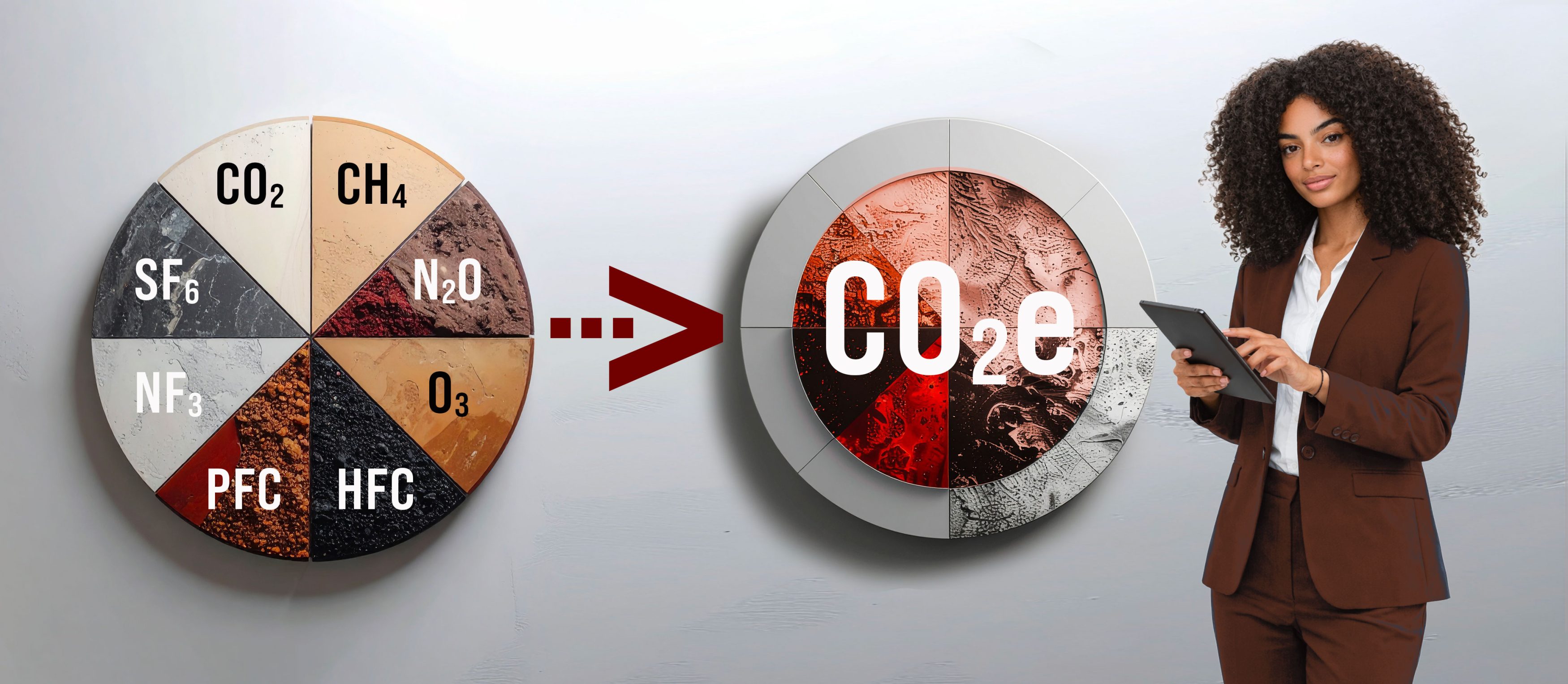
It is not limited to carbon dioxide (CO₂), but includes all climate‑altering gases covered by the Kyoto Protocol (such as methane and nitrous oxide). To make the data comparable and readable, all these gases are converted into a single unit of measurement: CO₂ equivalent (CO₂e).
In the flooring and construction materials sector, the carbon footprint measures the impact of the product throughout its entire life cycle (Life Cycle), from the extraction of raw materials to end‑of‑life disposal, providing a scientific “snapshot” of its ecological weight.
How is it calculated?
Calculating the Carbon Footprint requires scientific rigor and follows internationally recognized standards, primarily the GHG Protocol and the ISO 14064 standard.
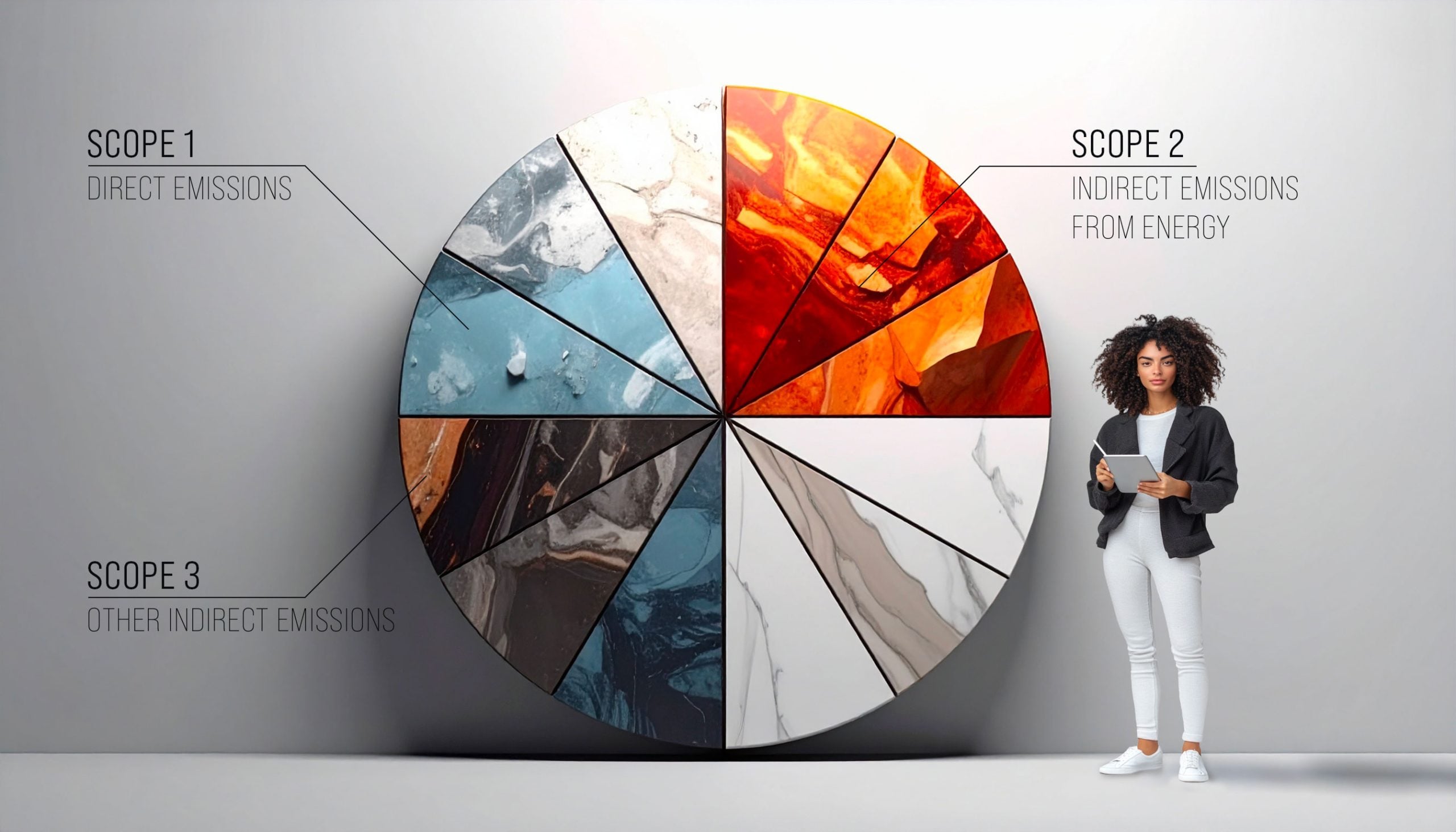
The methodology involves dividing emissions into three distinct categories, indicated by the English term “Scope”:
- Scope 1 (Direct emissions): These are emissions generated directly from sources owned or controlled by the company, such as fuels burned in production plants or by company vehicles.
Scope 2 (Indirect emissions from energy): These refer to emissions resulting from the generation of electricity, heat or steam purchased and consumed by the company.- Scope 3 (Other indirect emissions): This is often the most significant and complex category. It includes all indirect emissions that occur along the value chain, both upstream (raw material extraction, supplier transport) and downstream (product use, disposal).
For a product such as rubber flooring, the calculation translates into a Life Cycle Assessment (LCA), which is then formalized in an Environmental Product Declaration (EPD), a document certified by third parties that makes the data transparent and comparable.
Why is it important to calculate it?
Measuring the carbon footprint is the essential first step for any decarbonization strategy: what cannot be measured cannot be reduced. The main reasons are three:
- Regulatory compliance and risks: European and international regulations are becoming increasingly stringent. Monitoring emissions allows companies to anticipate legal obligations and mitigate risks related to carbon taxation.
- Reputation and transparency: In a market saturated with greenwashing, providing certified data (such as validation of the SBTi Action Plan or EPDs) builds trust among investors, clients and stakeholders, demonstrating a concrete commitment to limiting global warming to within 1.5°C.
- Operational efficiency: Emissions analysis often highlights energy inefficiencies or resource waste, enabling companies to optimize production processes and reduce industrial costs.
How does it affect construction sites and tenders?
In Italy, the calculation of the Carbon Footprint has a direct and binding impact on public procurement through the CAM (Minimum Environmental Criteria) for construction.
With the entry into force of the new Public Procurement Code (Legislative Decree 36/2023), the adoption of CAM has become mandatory for the entire value of the tender.
This means:
- Technical specifications: Contracting authorities must require materials that meet precise sustainability and low‑emission requirements, verifiable through environmental labels compliant with ISO 14025 (such as EPDs).
- Award criteria: In tenders awarded on the basis of the most economically advantageous offer, higher technical scores are given to projects that use materials with a lower carbon footprint or a higher percentage of renewable or recycled content.
Ignoring these parameters can lead to exclusion from the tender or a loss of competitiveness compared with design proposals that perform better from an environmental perspective.
Artigo’s contribution to reducing the carbon footprint:
- Artigo has chosen to address the challenge of decarbonization with a scientific and transparent approach, going beyond statements of intent. Our commitment takes the form of measurable actions
- SBTi validation (Science Based Targets initiative): In 2024 we obtained validation of our emission‑reduction targets, aligning them with the scientific parameters necessary to limit global warming.
CONTACT US!
"*" indicates required fields