
July 24, 2026
Circular construction:
what it is and how it applies to building
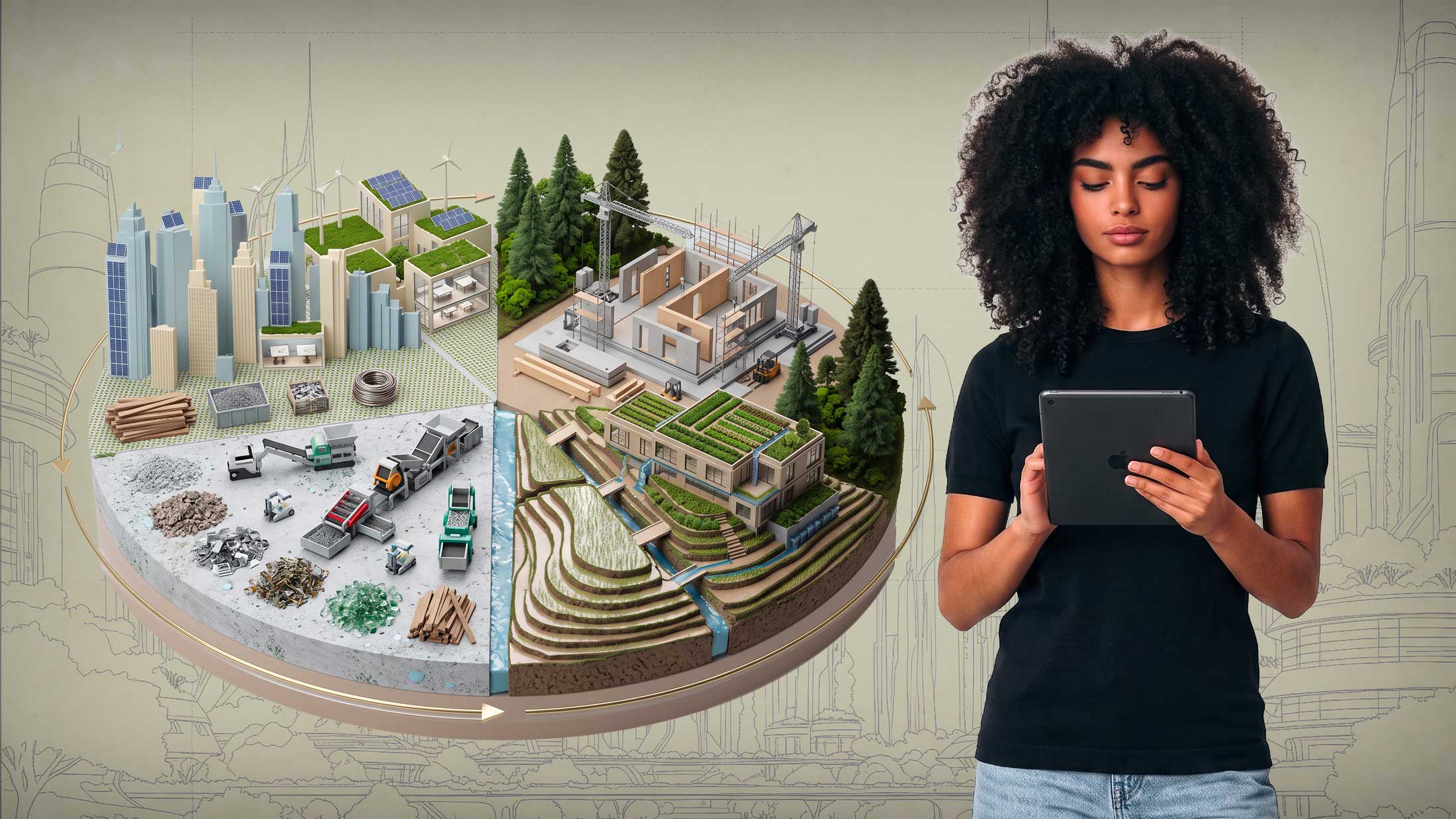
Circular economy in construction focuses on reducing consumption and recovering and recycling materials and energy, with the aim of using resources in a sustainable and more economically efficient way. It represents a paradigm shift that concerns the entire building life cycle, with the goal of preserving what already exists, reducing material use, designing for durability, and making it easier to reuse components at end of life.
In this sense, buildings can also be seen as a “material bank”, while tools such as LCA, EPDs, and product passports help make material flows more traceable and comparable, favoring solutions that retain value over time.
What are the core principles?
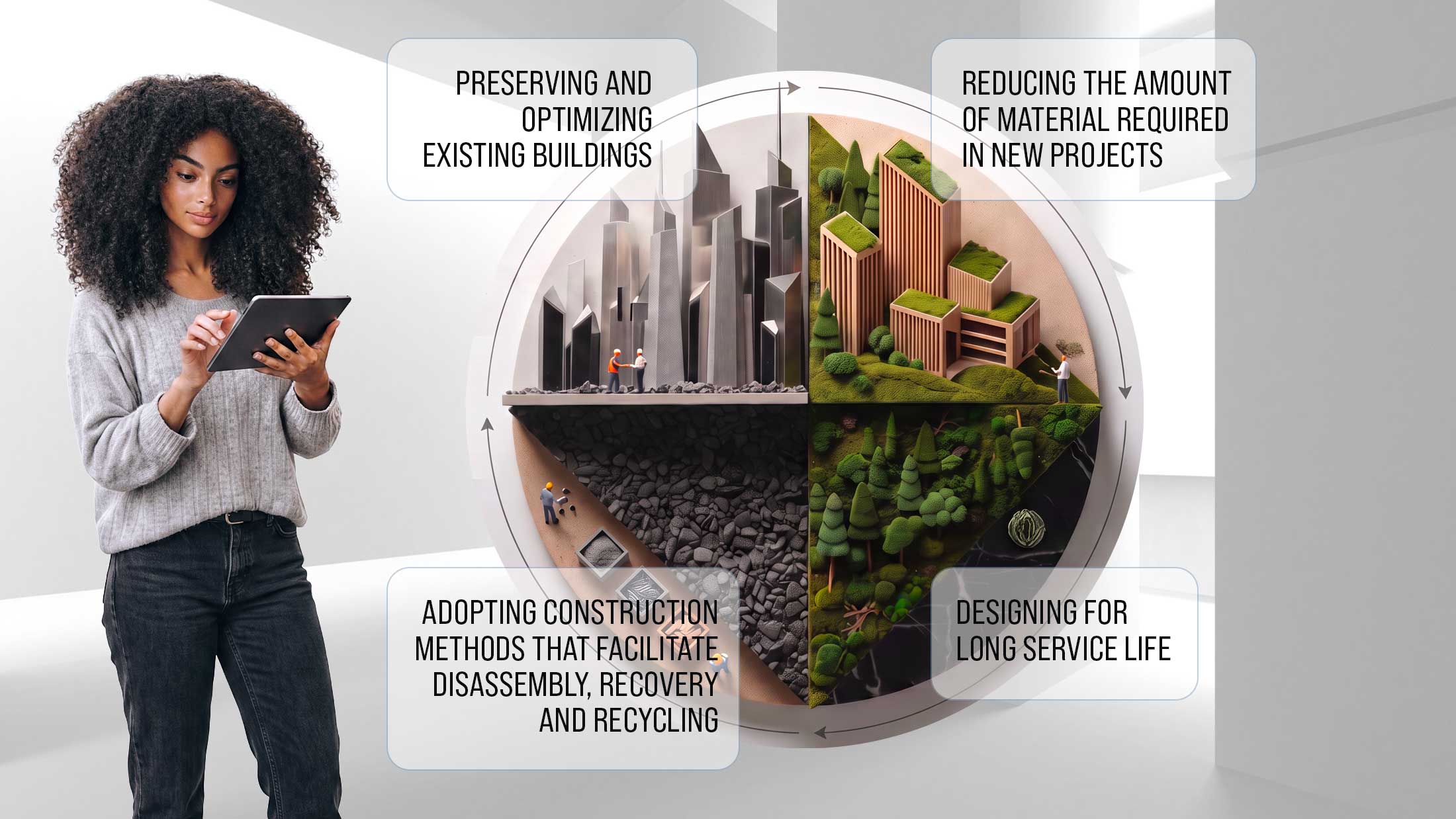
The key principles of circular construction include:
- preserving and optimizing existing buildings;
- reducing the amount of material required in new projects;
- designing for long service life;
- adopting construction methods that facilitate disassembly, recovery, and recycling.
Artigo’s bio-attributed rubber flooring helps designers and facility managers apply the principles of circular construction
Artigo’s bio-attributed rubber flooring from the GAIA range can support a circular construction strategy because it is a building material with measurable environmental data, consistent with a life-cycle-based design approach.
These floors support sustainable architecture goals by integrating bio-based raw materials, such as replacing quarried silica with silica derived from rice husk, or by using bio-attributed rubber produced with bio-based oils from plants or seeds.
In a B2B project, this is useful because it allows specification documents to include materials supported by EPDs, compatible with local market requirements and part of a corporate emissions-reduction strategy for which Artigo obtained SBTi validation in 2024.
For designers and facility managers, the point is not to consider flooring as a simple finishing element, but as a component that contributes to measuring the building’s overall environmental impact.
What is the difference between sustainable and circular construction?
Sustainable construction has a broader scope and aims to reduce the building’s overall environmental impact through energy efficiency, indoor health, low-emission materials, certification schemes, and the renovation of existing buildings.
Circular construction, by contrast, places particular emphasis on preserving the value of materials over time, focusing on reuse, repair, refurbishment, and recycling for as long as possible. A product that fully fits the definition of circular construction is Artigo’s GAIA rubber flooring, especially its heterogeneous backing, unique in the rubber flooring market, which has allowed new life to be given to recycled materials.
In other words, sustainability asks for better buildings; circularity also asks for buildings designed not to become waste too soon.
What are the environmental benefits of circular economy in construction?
The main environmental benefits are reducing the use of virgin raw materials, decreasing construction and demolition waste, and lowering landfill disposal.
A circular approach can also reduce the project’s carbon footprint because it considers the entire life cycle of products and the building, from raw material extraction to end of life.
When the strategy favors renovation and reuse of existing buildings, it also reduces new land consumption and the emissions linked to new construction and building sites, thereby lowering environmental impact.
What are the main challenges, and how can they be overcome?
The most common issues are technical and regulatory barriers to material recovery, difficulty in qualifying alternative materials, a lack of structured data, and the need for interoperability among supply-chain systems and actors.
To overcome them, we need design for disassembly, selective deconstruction plans, component exchange platforms, digital material passports, and closer collaboration among designers, contractors, clients, and manufacturers.
EPDs and clear evaluation criteria help build market trust and turn circularity from an intention into a measurable requirement.
How circular construction relates to sustainability certifications and EPDs
In the operational language of circular economy in construction, sustainability certifications and Environmental Product Declarations (EPDs) are essential tools for translating environmental goals into data, specifications, and verifiable criteria.
An EPD translates LCA analysis into transparent and comparable environmental information, such as Global Warming Potential. It also supports designers and clients in evaluating materials across the building’s full life cycle.
Together with environmental certifications and green building rating systems, EPDs make it possible to document product performance, guide design choices, and define more transparent specifications. Verified data makes it easier to compare alternatives and integrate measurable environmental criteria into project decisions.
Circular construction is therefore not just a linguistic trend, but a design criterion that requires metrics, documented materials, more transparent supply chains, and a long-term vision. For those designing contemporary spaces, integrating circular economy into construction means moving from a linear consumption logic to a value-based logic, where every technical choice affects resources, emissions, maintenance, and the building’s end of life.
CONTACT US!
"*" indicates required fields